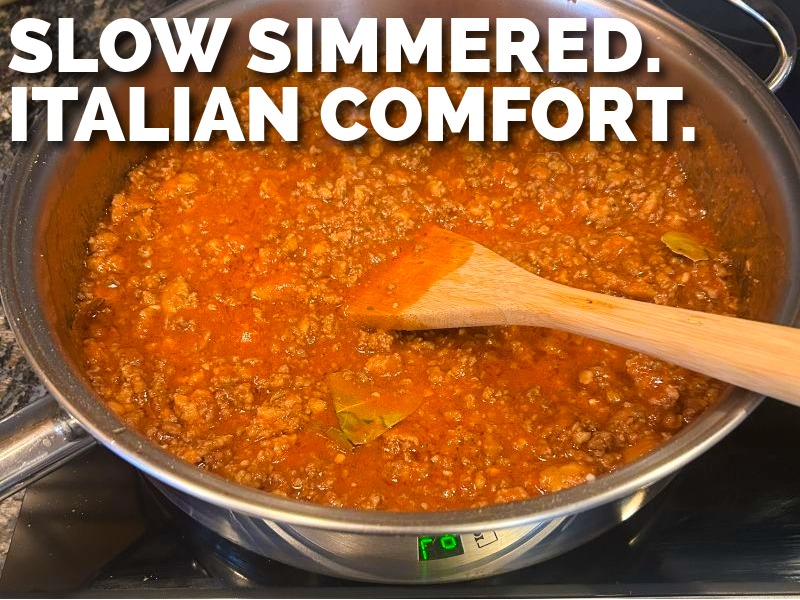
This Beef Ragù Sauce is a slow-simmered Italian classic made with just beef, onion, garlic, herbs, and silky Passata. The result is a clean, deeply flavorful sauce that stays true to traditional Italian simplicity. Perfect for spooning over thick pasta, layering into lasagna, or serving with creamy polenta, this ragù is hearty, honest, and incredibly comforting.
The Simplicity of Italian Ragù
In central Italy, ragù often leans minimalist — fewer vegetables, no sugar, and long simmer times to intensify flavor naturally. This passata-based version reflects that traditional approach, focusing entirely on the richness of beef, aromatics, and slow cooking.
When cooking Italian sauces, the choice between Passata and peeled tomatoes can completely change the texture and flavor of your dish. Here’s the breakdown:
Passata vs. Peeled Tomatoes
Want to know which tomato base to use?
Passata
- Smooth, silky, strained
- No seeds or skins
- Bright, clean, uncooked flavor
- Best for: ragù, marinara, pizza sauce, smooth pasta sauces
Peeled Tomatoes
- Whole or halved, rustic texture
- Slightly sweeter and deeper flavor
- Cooked during canning
- Best for: Amatriciana, Arrabbiata, stews, chunky sauces
The Amore Life Tip:
Use Passata when you want a smooth, elegant sauce.
Use peeled tomatoes when you want body and chunky texture
Chefs & Traditions That Celebrate Ragù
Italian chefs like Marcella Hazan, Lidia Bastianich, and Gennaro Contaldo champion clean, slow-simmer ragù recipes without added sugar. Restaurants throughout Emilia-Romagna and Lazio serve versions similar to this one — simple, rustic, and deeply flavorful.
Ways to Serve Beef Ragù
Serve over pappardelle, rigatoni, or tagliatelle, or layer it into lasagna with mozzarella and béchamel. Pair with a bold Italian red like Chianti Classico or Barolo for a classic Italian table experience.
Make this slow-simmered Beef Ragù tonight and bring authentic Italian comfort into your kitchen — simple ingredients, big flavor, pure satisfaction.
My Go-To Beef Ragu
Equipment
- Large heavy-bottomed pot or pan
- Wooden spoon
Ingredients
- 2 lbs Ground meat Bison, Beef, Sausage, Lamb, Veal – your choice or mix and match
- 2 tbsp Olive oil
- 1 Yellow onion diced
- 5 Garlic cloves minced
- 1 1/2 tsp Salt
- 1 tsp Ground pepper
- 1 tsp Dried oregano
- 1 tsp Basil dried or fresh
- 1 tsp Crushed red pepper flakes adjust accordingly to taste
- 1 cup Dry red wine (Chianti) optional
- 24 oz Passata one jar
- 2 Bay leaves

Instructions
- Brown the meat– Add ground meat, breaking it up with a spoon. Cook until well browned and slightly caramelized, 8–10 minutes. Do not rush this step — browning adds deep flavor.
- Drain the meat- Depending upon the meat, draining the fat is recommended but not required. You can use the same pan or swap.
- Sauté aromatics – Heat olive oil in a large pan over medium heat. Add onion and cook until softened and translucent, about 8 minutes. Add garlic and cook for 1 minute
- Season the base – Stir in salt, pepper, oregano, basil, and red pepper flakes.
- Deglaze with wine – Pour in red wine and simmer until reduced by half, scraping up browned bits from the bottom.
- Build the sauce – Stir in tomato paste, Passata, and bay leaves. Mix well. Taste and add more olive oil as needed.
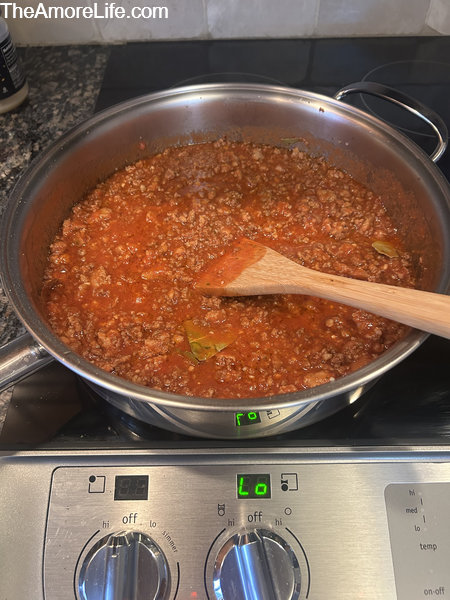
- Slow simmer – Reduce heat to low, partially cover, and simmer for 2 to 2½ hours, stirring occasionally. The sauce will thicken and deepen in flavor.
- Finish the ragù – Remove bay leaves and adjust seasoning. Add a tablespoon of butter or a splash of cream for silkiness (optional but excellent).
- Serve – Spoon over pasta, layer into lasagna, or serve atop polenta. Garnish with basil or parsley
Notes
- Passata gives a smooth, elegant texture — ideal for ragù.
- Browning the beef well is essential for depth and richness.
- Ragù tastes even better the next day.
- Freeze leftovers for up to 3 months.
- Adding in a rind of Parmigiano Romano adds flavor.
- If making pasta, adding a bit of the starchy pasta water can liquify the sauce if needed.